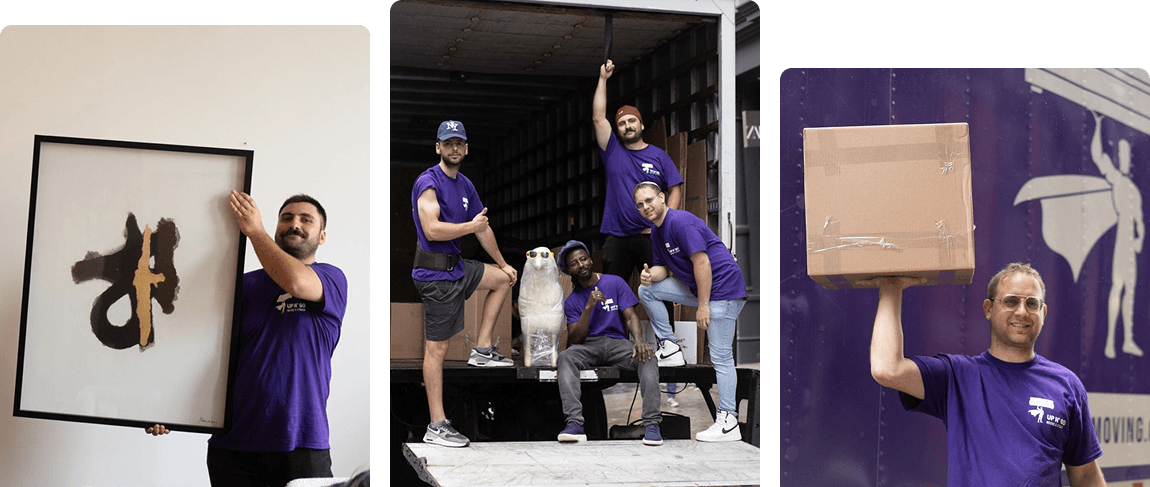


Some items will not go up a New York City staircase or into a Manhattan freight elevator. A crane moving service in NYC that residents and businesses can rely on begins with a site survey, a load calculation, and a permit file, not with the crane. Up N Go Moving handles all of it.
Grand pianos, rooftop equipment, safes, HVAC units, and oversized sofas will not fit the stairwell. Hoisting on the outside of the building is the only route left, and in New York City, that route runs through the NYC Department of Buildings first.
Up N Go Moving & Storage is a licensed New York City moving company based in Long Island City, Queens. Our movers survey the job, handle the permits, and quote the crane move at a flat rate before move day.
Up N Go is a moving company first. Our movers run crane services across the five boroughs every week, so the crane is one tool inside a job that also covers packing, protection, transport, and placement. Booking crane services from a moving company is not the same as booking a machine and finding movers separately.
Most crane jobs start as a measuring problem. A baby grand is wider than the turn in the stairwell. A rooftop heating and cooling system weighs more than the freight elevator is rated to carry. A sectional clears the door but not the corridor.
The pattern repeats across the five boroughs. Safes, marble countertops, oversized artwork, mechanical equipment, generators, and HVAC units bound for a roof all end up on the crane. Older Manhattan walk-ups and converted Long Island City lofts see it most, because their stair turns and elevators were sized for the furniture of another era.
Weight decides the rest. Where your item falls against the city licensing threshold changes which license applies and what the job costs, so we confirm the weight and dimensions before quoting.
The warehouse often comes into it. When the new space is not ready, furniture and equipment can go into secure storage after the crane lift and come back out on the date you choose. That keeps one crane job from becoming two.



New York City treats a hoist as regulated work, not a moving detail. Lifting anything on the outside of a building generally has to be carried out by, or supervised by, a rigger licensed by the NYC Department of Buildings, and the license class depends on the weight of the load. Master Riggers sit at the top of that ladder.
The rules carry exceptions, and they get amended, so this is not a page to take as legal advice. We confirm which category your lift falls into before a date is set, rather than letting anyone discover a licensing problem on the morning.
Crane operators are licensed separately from riggers, with classes tied to the size and type of machine. Smaller equipment can sit outside the requirement altogether. Ask whoever runs your lift which license applies to it, then ask to see it.
Then there is the street. A crane or boom truck on the roadway or sidewalk needs a New York City Department of Transportation permit, plus a traffic control plan where lanes are affected. Manhattan applications get the harder review, because work performed there routes through the Office of Construction Mitigation and Coordination before a permit is issued.
The city also imposes construction embargoes at busy times of year, including a stretch around the winter holidays when permits in affected areas are suspended. A Midtown lift in December is a different scheduling problem from a Queens lift in April.
Somebody has to file all of this. On a crane project, the paperwork usually sets the date rather than the equipment, and coordination with the building runs alongside it. We open the permit work as soon as the survey is done, tell you where the application stands, and point you to the Department of Buildings and DOT sources if you want to check the requirements yourself.

Every lift is planned around the load. Before a date is confirmed, we establish weight and dimensions, the pick point, the swing path, where the machine can legally set up, and what the building wants in writing. That plan decides the rigging.
Rigging gets the least attention and does the most work. The load has to hang level, the lifting points have to sit above its center of gravity, and the rigging hardware has to be rated well above the actual weight. Get any of the three wrong and the piece swings.
Different pieces need different rigging. A piano rides on a board with slings arranged around it. Glass and stone travel upright in a frame. Mechanical equipment often has manufacturer lifting eyes, and where it does not, the rigging goes around the frame rather than the housing.
Protection is the part that belongs to the movers. Our movers wrap the piece, build a custom wooden crate on site where the item warrants one, and install floor runners and corner protection at both addresses. Padding sits under the rigging so no strap bears directly on veneer, glass, or a piano case.
Rigging equipment is matched to the load, not pulled off the truck by default. Slings, straps, and lifting points are chosen for the weight and shape of the piece, and the rigging is checked before anything leaves the floor. The building, the permit, and the machine also have to be available in the same window, and a coordinator confirms all three.
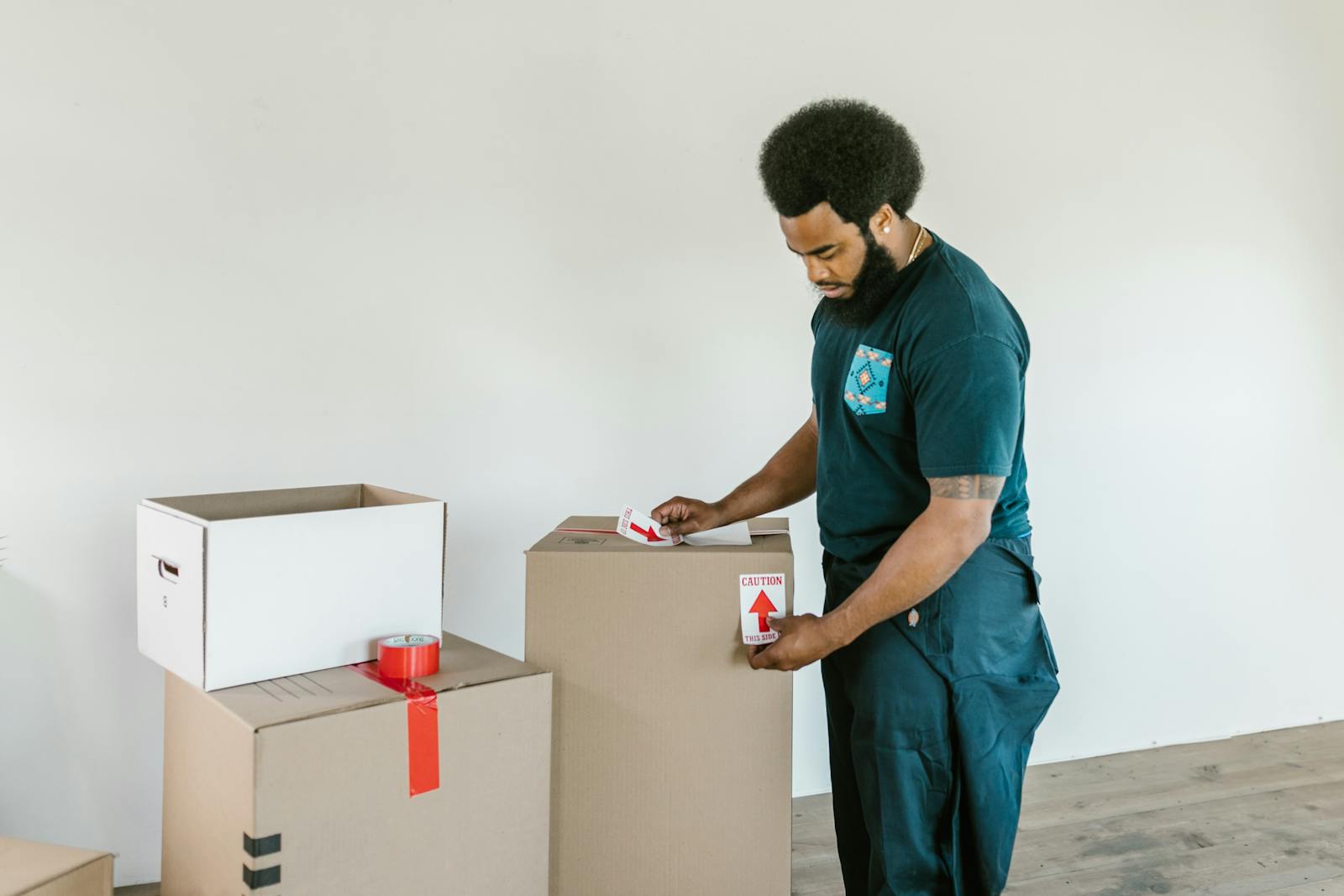
Every crane service starts with the survey. A crew lead measures the piece, checks the window or balcony it will pass through, photographs the street, and confirms where the crane can stand. That visit is where the rigging plan gets written, and where most surprises get caught.
On the day, our movers arrive ahead of the machine to protect the route, clear the landing area, and set up traffic control where the permit calls for it. Rigging goes on at street level where there is room to work, not in a hallway. The crane lift itself is usually the shortest part.
Communication runs alongside all of it. One coordinator owns the project from the survey through to final placement, so you are not chasing a dispatcher, a driver, and licensed operators separately. Efficiency on a crane job comes from that single thread, not from rushing the lift.

Our warehouse sits in Long Island City, minutes from the Queensboro Bridge. Crews reach Midtown, the Upper East Side, the Upper West Side, and Downtown Manhattan without fighting an outbound commute.
Converted lofts in Long Island City, waterfront towers near Gantry Plaza State Park, and pre-war Manhattan walk-ups each present a different access problem. We plan around the building, its Certificate of Insurance rules, its elevator reservations, and the no-standing zones that determine where a machine can sit.
Timing is most of it here. Getting the truck and the crane in before the morning rush matters, and so does working inside the loading dock hours a building allows. Clearing the street before the afternoon builds up is the difference between a short operation and a lost day. Local expertise counts for more than fleet size, because NYC movers who work these blocks daily already know which hour to book.
Our service area covers Manhattan in New York County, Brooklyn in Kings County, Staten Island in Richmond County, plus Queens County and Bronx County. Beyond the city, we serve Nassau and Suffolk Counties on Long Island and the Hudson, Bergen and Essex County markets in northern New Jersey.
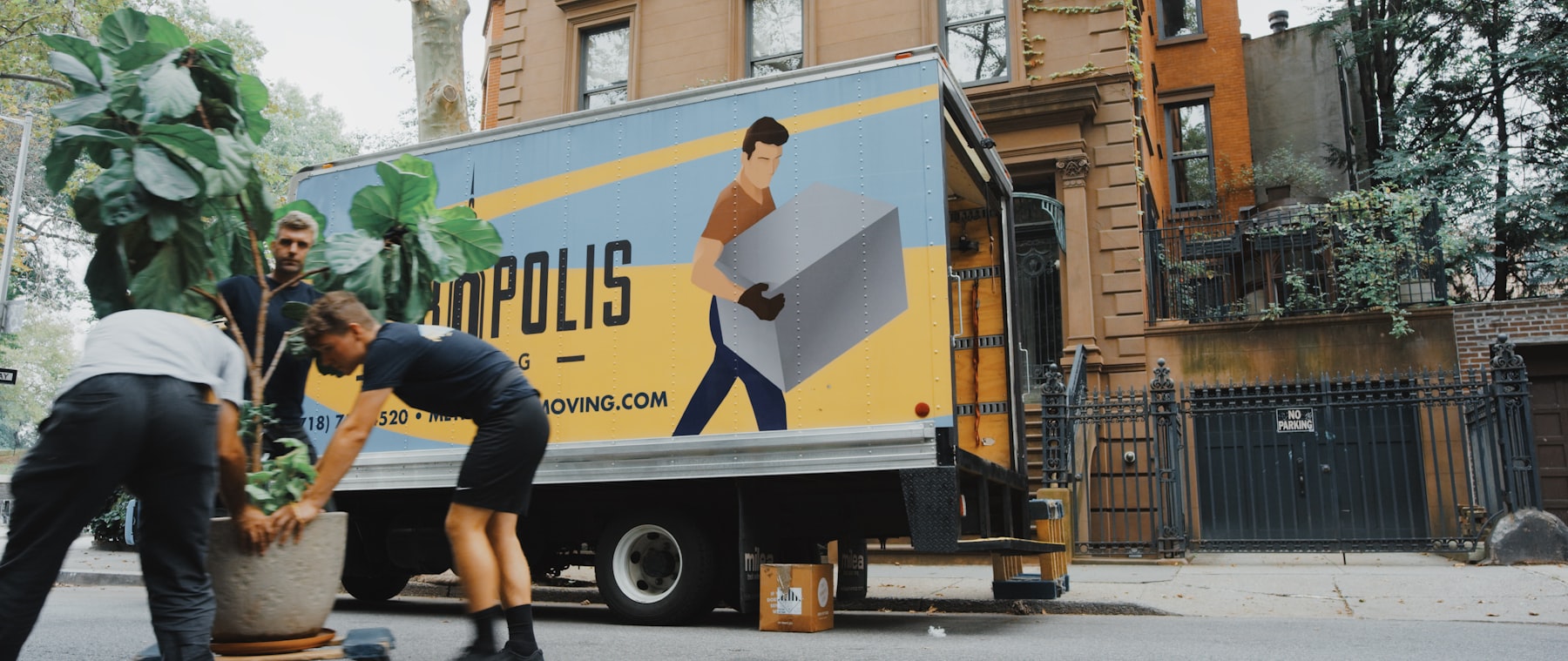
Not every crane job is residential. Our crane services cover restaurants, offices, medical practices, galleries, and light industrial projects. Heavy equipment and machinery moving is routine work for us, from commercial kitchen fitouts to rooftop equipment at the end of its life. Machinery rigging is part of that service.
Moving heavy machinery inside the building is often the harder half. The route to its final position runs through door frames, tight turns, and floors with weight limits. Our movers handle the rigging, disassembly, skating, and reassembly, and coordinate with your building engineer.
Off-hours lifts are standard. Overnight, weekend, and holiday scheduling keeps a restaurant serving while the machine works, and it is often the only schedule a street permit allows.
Business customers usually want the logistics handled end to end. We schedule crane services around your trading hours, coordinate with your contractor or engineer, and hold heavy equipment in our warehouse when the new site is not ready. One company, one crew, one point of contact.

Five things move the number. The weight and dimensions of the piece, the height it has to travel, the rigging it needs, the site access at both ends, and the permit path. A ground-floor pick on a quiet side street and a twentieth-floor pick on a bus route are different crane projects even with the same sofa.
Transport distance matters less than most people expect inside the five boroughs. What costs money is waiting, and waiting usually comes from a permit that has not landed or a building that has not confirmed its window. Good logistics is mostly the removal of waiting.
We price crane services as a flat rate rather than an hourly one for that reason. A cost that depends on how the day runs is a cost the customer ends up carrying. Ask any crane moving company you are comparing for a written quote, and check what sits inside the number and what does not.

Up N Go Moving & Storage holds a 4.9 rating on Google, 4.8 on Yelp, and 4.9 on Thumbtack.
One customer wrote, “Had a small job – including a huge piano. And they were great! The Guys were absolute troopers! Well organized!”
Crew members including Edward, Besi, Marco, Bryant, and Felix are named repeatedly in reviews for communication and professionalism. On a job scheduled around a permit window, that is the part customers notice.
Ask about a recent project like yours when you call. A piano through a fourth-floor window and a rooftop condenser are different crane projects. Hearing how the movers handled one close to your own tells you more than a review score does.

Our federal and state authority runs under USDOT 1503133, NYSDOT T38847, and MC-564417. We comply with the Federal Motor Carrier Safety Administration regulations in 49 CFR, New York State Transportation Law section 140, Title 17 NYCRR, and the Vehicle and Traffic Law. We provide Workers’ Compensation for all staff.
Crane services sit inside a wider commercial and industrial moving practice. That covers office moving, restaurant equipment moving, piano moving, fine art moving, custom crating, and warehousing.
The price we quote is the price you will pay. The flat rate includes labor, transport, gas, tolls, standard wrapping and floor protection, with no surprise costs for stairs, long carries, or extra time.
Each crane service is quoted as one job rather than assembled from parts. Before you book, our movers set out in writing what the number covers for your project, from the crew and the transport to any permits involved, so nothing surfaces on move day. That is the service the flat rate is built around.
A reliable moving company should show you all of this before you book any crane service. The regulations above govern your lift, the rigging is the part that carries your property, and movers capable of the job will walk you through both without being asked. That is what a reliable company looks like from the outside.

Tell us the item, the floor, and the address, and our movers will tell you what New York City requires to get it there. Same-day consultations on every crane service, and no charge for the quote.
Call (212) 744-6683 or request a free quote online. Up and Go Moving, 47-00 Northern Blvd, Long Island City, NY 11101. Serving all five NYC boroughs, 24/7.