
Insurance Requirements for Moving Commercial Kitchen Equipment in Manhattan, NY (Liability, Coverage, and Risk Gaps)
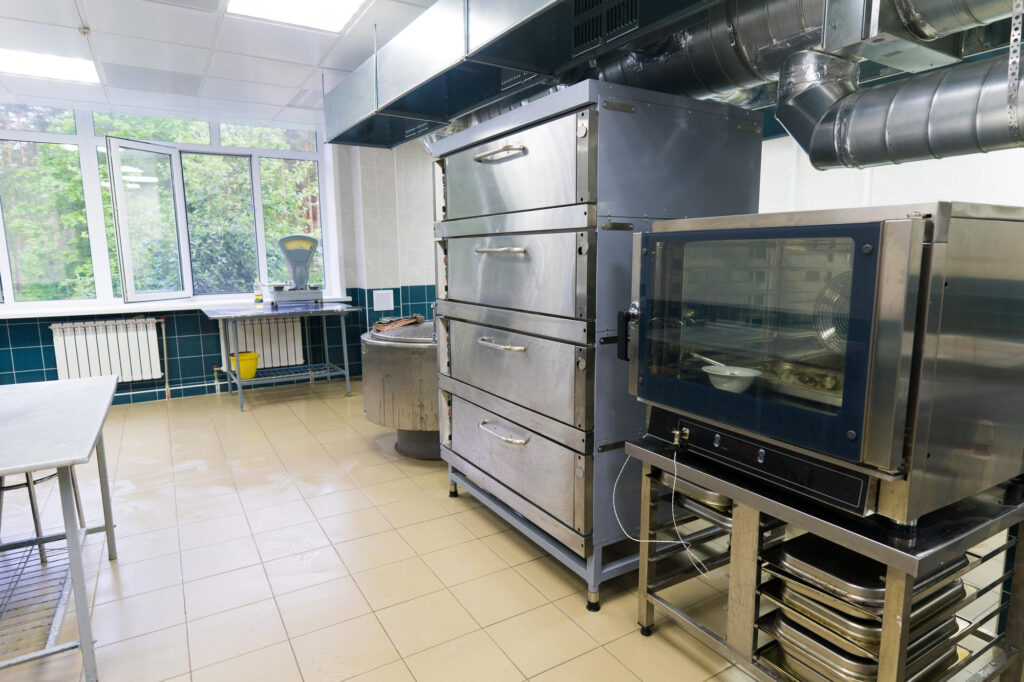
A commercial range, a walk-in compressor, and a six-foot hood are among the heaviest, most expensive, and least replaceable items a business ever asks a mover to carry, and the default coverage attached to that work is far thinner than most operators assume.
Weight is what pays out under basic carrier liability, not value, and kitchen equipment is dense in ways that make that formula punishing.
Our crews at Up N Go Moving & Storage move commercial kitchen equipment across Manhattan at a flat fee, with the coverage conversation handled at the quoting stage rather than after something goes wrong. Knowing which of the four separate coverages applies to your equipment is what turns a claim from a dispute into a payment.
Four Different Coverages, and Why Operators Confuse Them
Restaurant owners usually describe a mover as insured, which is true and also almost meaningless without specifics. Four distinct protections sit behind that word, and each one answers a different question.
General liability covers injury and property damage the crew causes to the premises. Workers’ compensation covers the crew themselves. Auto liability covers the vehicles. Cargo valuation covers your equipment while it is in the mover’s hands.
Only the last of those pays for a cracked compressor or a dented hood. The first three protect the building, the crew, and the road, which is exactly why a certificate of insurance satisfying your landlord tells you nothing about what happens to the equipment.
Anyone arranging commercial kitchen equipment moving should ask about valuation separately from the certificate the building requires.
What Basic Carrier Liability Pays on Heavy Equipment
Cargo valuation on interstate moves runs on two federally defined levels, and the gap between them is severe. Released value protection is the no-cost option, and it caps the mover’s liability at sixty cents per pound per article regardless of what the item cost.
Full value protection is the higher level, under which the mover repairs, replaces, or settles in cash based on the item’s value, and it carries a charge priced against the declared value of the shipment.
Run the arithmetic on real kitchen equipment, and the problem is obvious. A four hundred pound commercial oven damaged beyond repair returns two hundred and forty dollars under released value. A fifteen hundred pound walk-in box returns nine hundred.
Neither figure approaches replacement cost, and neither accounts for the revenue lost while a kitchen waits on a new unit. On interstate work, full value protection applies by default and released value requires a written waiver, which means an operator can sign away the stronger coverage while believing the signature was routine paperwork.
The coverages a Manhattan restaurant move generally involves:
- General liability, with limits and named parties set by the building rather than by the mover
- Workers’ compensation for every crew member on site
- Auto liability for the vehicles making the delivery
- Cargo valuation, either released value by weight or full value based on declared worth
- Separate equipment or business interruption coverage held by the operator
Risk Gaps Nobody Finds Until a Claim Is Filed
The widest gap sits between physical damage and consequential loss. Valuation coverage addresses the unit itself.
It does not address the days a dining room stays dark, the catering contract that goes unfulfilled, or the inspection that cannot be scheduled until the equipment is operating. Business interruption coverage lives on the operator’s own policy, and confirming it exists before the move is faster than discovering it does not afterward.
A second gap opens around disconnection and reconnection. Gas lines, electrical service, water connections, and refrigeration lines frequently require licensed trades, and work performed by the wrong party can void both the equipment warranty and the coverage attached to it.
Operators thinking through how kitchen equipment damage claims work usually find the dispute turns on who touched the connection rather than on who carried the unit.
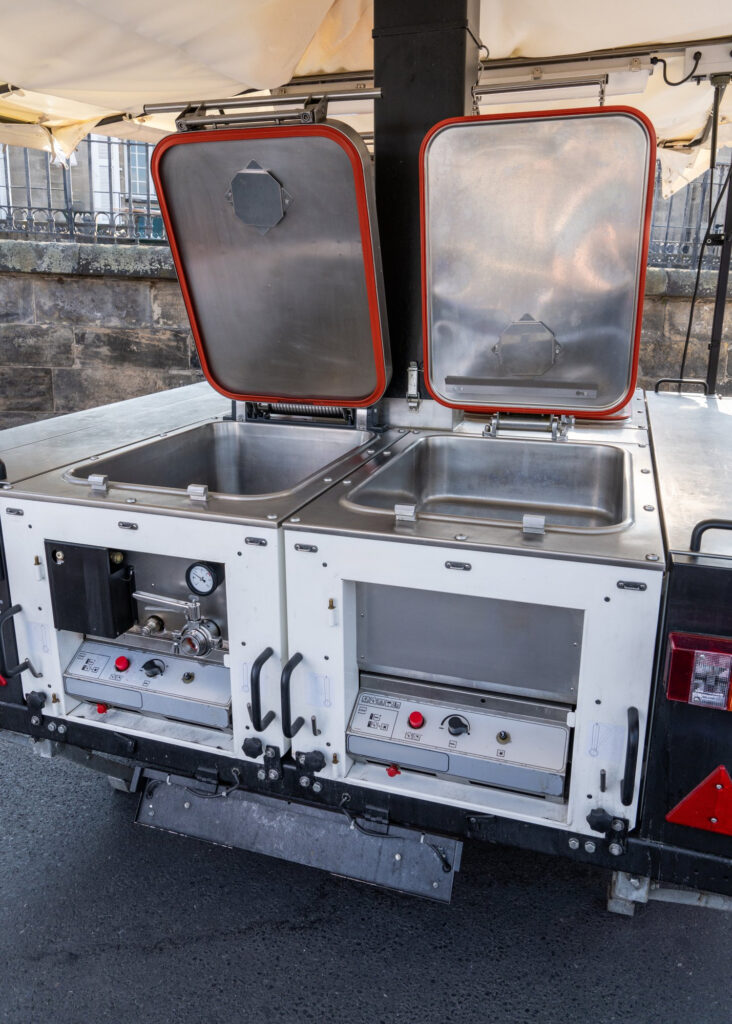
Pre-existing condition is the third gap. Kitchen equipment that has run hard for years arrives at a move with dents, corrosion, and worn casters already present, and without documented condition at origin, a claim becomes one party’s word against another’s. Photographing every unit before it moves protects both sides and costs nothing.
Relocating a kitchen in Manhattan? Send us the equipment list and both addresses, and we will scope the handling, the connections, and the coverage in one flat-fee quote.
What Manhattan Buildings and Landlords Require Before Access
Building requirements operate independently of everything above. Most commercial properties in Manhattan demand a certificate of insurance before a mover is allowed past the loading dock, and the certificate must name the correct parties, typically the building owner, the managing agent, and sometimes the net lessee, each spelled exactly as the building specifies.
A certificate with the right limits and the wrong name gets rejected at the door.
Timing is where restaurant moves break down. Buildings commonly want the certificate days in advance, and freight elevator windows are reserved on a schedule that fills quickly at month end.
A rejected certificate on move morning means a lost elevator window, a crew standing idle, and a date that slips into the following week. We handle the certificate request at booking rather than treating it as paperwork to chase, and we ask for the building’s requirements in writing so the document matches them the first time.
Questions to Settle Before the Equipment Leaves the Kitchen
Settle valuation in writing before move day and keep the paperwork. Ask which level applies, what it pays per pound or per item, what the deductible is, and whether any high-value unit needs to be declared separately to be covered at its real worth. Ask what the claims window is and what documentation it requires, because most windows are short and most denials are procedural.
Settle the scope boundaries too. Confirm who disconnects and reconnects each utility, who is responsible if a unit fails to start at the new address, and what happens if a piece does not clear a doorway or a dock height.
Put the equipment list in the quote with weights and dimensions attached, because the list is what both the price and the coverage are built on. Compliance detail matters as much as coverage detail, and the compliance risks in equipment relocation tend to surface in the same conversation.
Send the equipment list, both addresses, and your building’s insurance requirements. We will return one flat-fee price covering the handling, the protection, and the placement, with the coverage levels stated plainly before you book. Call (212) 744-6683, Monday to Friday 9 am to 9 pm EST or Saturday and Sunday 9 am to 5 pm EST.
Related Topics: