How Event Equipment Is Packed, Transported, and Reassembled in Manhattan, NY
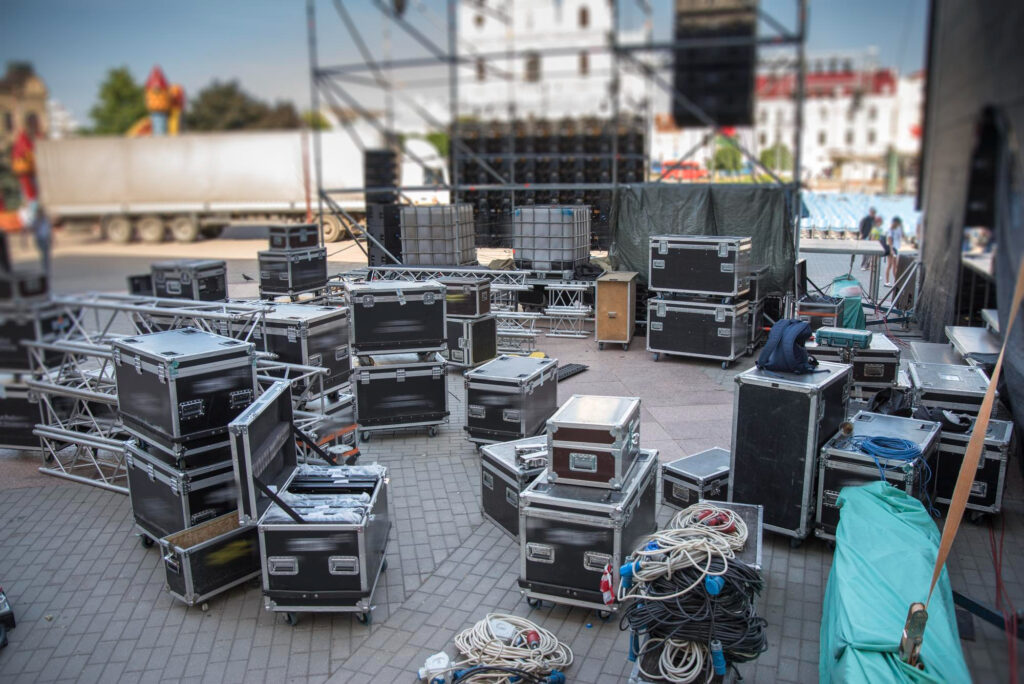
Event freight runs on a clock nobody can extend. A dock window opens, a room has to be built, a show happens, and the same equipment has to come out before the next group loads in. Everything about how event gear is packed and sequenced exists to serve that fixed schedule, which is why production moves look so different from household work.
Our crews at Up N Go Moving & Storage handle event and production moves across Manhattan at a flat fee covering the crating, the transport, the load-in, and the reset. The price holds whether the load-out runs past midnight or the dock assignment slips an hour, which removes the overtime argument from an already compressed night.
Why Event Freight Is Packed for Load-In Order, Not for Volume
Household packing is built around space. Event packing is built around the order things come off the truck. Staging and rigging go in first at the venue, lighting and audio follow, scenic and soft goods come next, and the finishing details land last, so the truck is loaded in reverse of that sequence.
A tightly packed truck that ignores the build order forces a crew to unload everything into a corridor to reach the thing they need first, and corridor space is the one thing a Manhattan venue never has.
That sequencing shapes the containers too. Cases are packed by build zone rather than by category, so a single case holds everything the crew needs for one position rather than every cable of one type.
Labels carry the destination zone, the build order, and the case count, because a crew working under time pressure should never have to open a case to learn what is inside it. Teams booking our special events moving service give us the run of show, and the load plan is built backward from it.
Crating, Cases, and Protection for Fragile Production Gear
Protection for event gear is decided by what the item does, not by what it costs. Equipment that must function on arrival, including consoles, dimmer racks, projectors, and media servers, is treated as sensitive regardless of its replacement value, because a unit that arrives intact but out of calibration has still failed the event.
Hard road cases handle the equipment designed for them. Everything else gets built for. Custom wooden crates make sense for oversized scenic pieces, framed artwork, sculptural elements, and purpose-built props that have no case and no second copy.
Internal blocking keeps items from shifting inside the crate, since most damage on a short Manhattan run happens during handling rather than at highway speed. Glass, acrylic, and mirrored surfaces travel on edge in padded frames rather than flat, and anything with a screen moves upright with the face protected.
What we confirm before a single case leaves the shop:
- Case and crate count against the inventory, with every piece labeled to a build zone
- Weights and dimensions checked against dock height, door width, and elevator capacity
- Items that need climate consideration flagged and loaded accordingly
- Rigging points and lift requirements identified for anything a crew cannot carry
- Cable, hardware, and spares packed with the position they serve rather than separately
Transport Through Manhattan on a Fixed Dock Window
The drive is rarely the hard part. The hard part is arriving inside an assigned window at a dock shared with other groups.
Venues and hotels run dock schedules coordinated through an event manager, assign access times rather than offering open access, and require certificates of insurance naming the facility and often the general service contractor before a truck is allowed to pull in.
Miss the window, and the next opening may not come until the following morning, which is why coordinating event production moves starts with the dock rather than with the truck.
Vehicle selection follows the dock, not the load. Many Manhattan docks cap trailer height around eleven feet six inches, some have no dock at all and require street-level transfer, and a few can only be reached through a service road with its own staging rules.
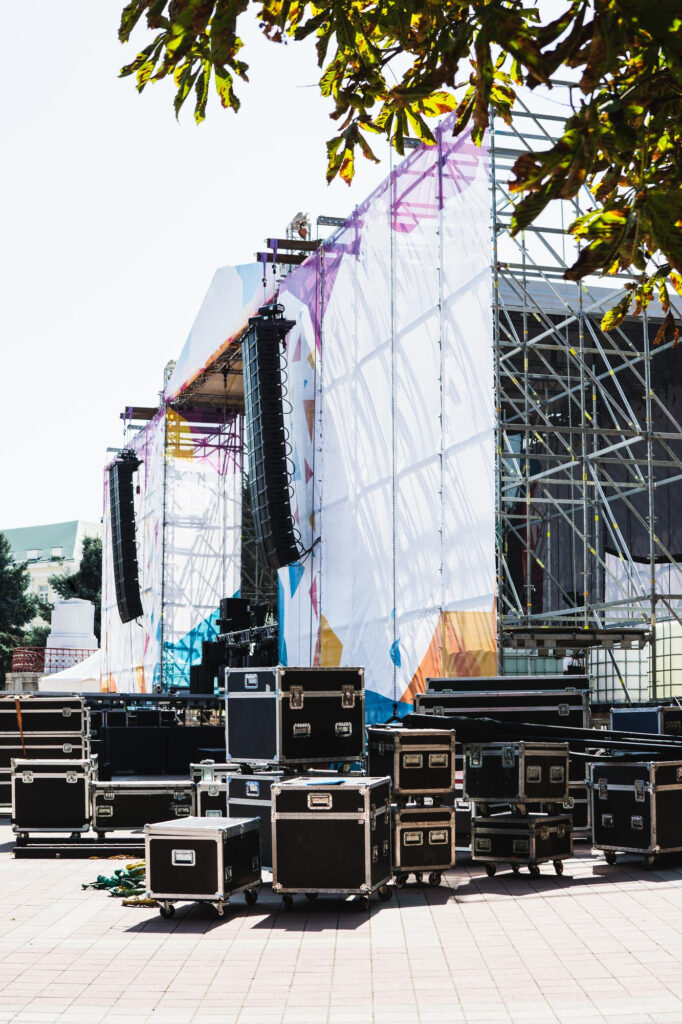
We check clearance and access before specifying the truck, which is why a job occasionally runs on two smaller vehicles instead of one large one. Street parking, lane restrictions, and construction embargoes during the holiday season all feed the same decision, and access is what dictates the schedule far more often than distance does.
Have a load-in date and a venue? Send us the inventory, the run of show, and the dock details, and we will return a flat-fee price covering crating, transport, and reset.
Reassembly On Site, and the Handoff to the Production Team
Reassembly starts with protection, not with equipment. Floors, carpet runs, corners, door frames, and elevator interiors get covered before the first case rolls, because venues inspect the route afterward and charge for what they find. Cases are then staged by zone so the build crew finds their gear where they expect it instead of excavating a stack in a corridor.
The handoff line matters as much as the work. Our crews place, assemble, and position equipment, and the specialist teams take over for anything requiring programming, calibration, certification, or electrical connection.
Power distribution, flown rigging, and anything requiring a licensed trade sit with the production vendors who own it. Agreeing that line in advance keeps a crew from waiting on an electrician while the dock window closes, and it comes up in every conversation about handling AV systems and lighting on a venue build.
Load-Out, Storage, and What Happens Between Events
Load-out rewards whoever packed carefully at the start. Equipment returns to the case it came from, counts are verified against the same inventory, and empties are tracked through the show rather than scattered, since a missing case at 2 am is what turns a clean strike into an overnight search. A venue that needs the room reset by morning gives no room for a slow reconciliation.
Between events, gear needs somewhere climate-stable to sit, and leaving it on a truck or in a corridor is not a plan.
We run a climate-controlled storage facility in New York City with short-term, long-term, and emergency options, which suits productions with gaps between dates, equipment waiting on a venue that is not ready, and recurring events that use the same build several times a year. Storing the build assembled by zone rather than mixed together shortens the next load-in.
Send the inventory, the venue, and the dates. We will scope the crating, the dock access, the crew size, and the reset, then give you one flat-fee price that holds through a long night. Call (212) 744-6683, Monday to Friday 9 am to 9 pm EST or Saturday and Sunday 9 am to 5 pm EST.
Related Topics: