How Crane Moving Is Used for Heavy Equipment and Machinery in NYC

Most buildings in New York City weren’t built with bulky equipment access in mind. Narrow doorways, cramped elevator cabs, twisting staircases, and underground loading docks all get in the way when something doesn’t fit inside a standard box. Sometimes, the only realistic way to get an item in or out of a building is through a window or over the roof, and that’s exactly the kind of situation crane moving is meant to handle.
If you’re looking into expert moving services in Queens, NY, it’s worth knowing that this specialized method exists precisely for those tricky, oversized jobs that regular moving trucks and elevators simply can’t manage.
When Standard Moving Methods Aren’t Enough
Most moves, even large and complicated ones, can be handled with the right crew, the right equipment, and a working freight elevator. Crane service becomes necessary when none of those options are available or practical. The clearest trigger is an item that simply can’t fit through a building’s standard access points.
Grand pianos going into townhomes, industrial refrigeration units heading into basement restaurants, oversized custom furniture being installed in a penthouse apartment, all of these situations come up regularly across the boroughs we cover as local movers.
Sometimes it’s not about size. A freight elevator might be out of service, weight limits on a building’s lift might not accommodate a specific piece of machinery, or a building’s entire layout may make it physically impossible to maneuver a large item through internal corridors. When any of these conditions are in play, a crane solves the problem cleanly.
How a Crane Move Actually Works
A crane move involves rigging the item, which means securing it with straps, padding, and a custom frame if needed, and then lifting it externally. That might mean going in through a window opening, over a wall, or onto a terrace or roof. The rigging process is the most technical part of the job. The item has to be balanced, secured against shifting during the lift, and wrapped to protect against contact damage during movement.
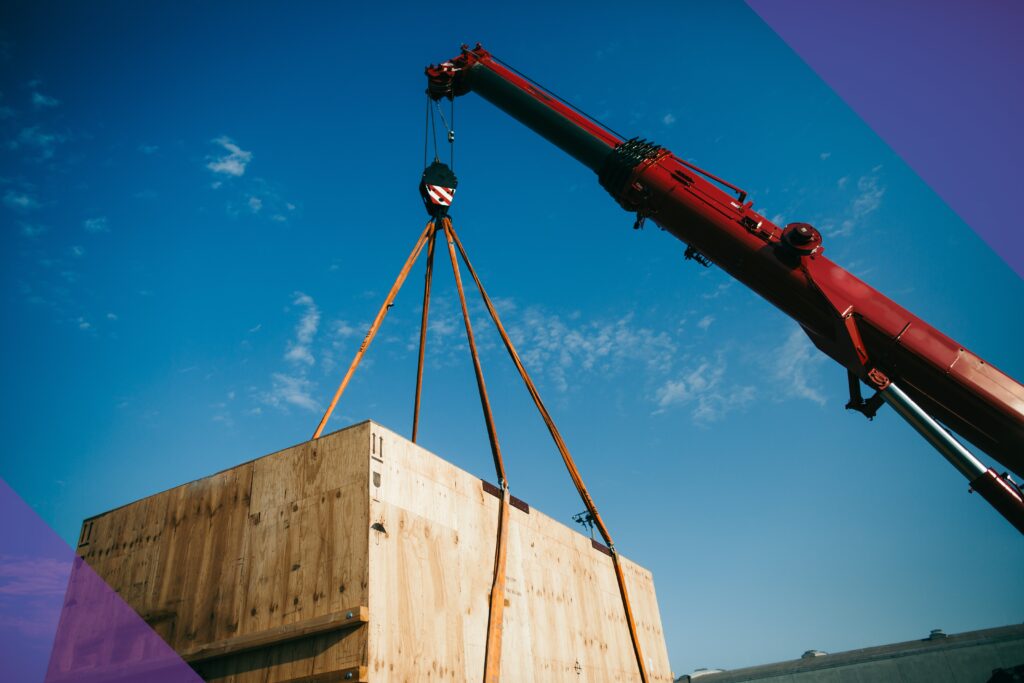
Our commercial and industrial moving crew coordinates the crane operation alongside the interior crew. Someone is on the street managing the lift while others are inside guiding the item into position. The two teams have to work in sync, particularly in tight openings where there’s very little room for adjustment once the item is in the air.
What Types of Equipment and Items Need Crane Service
The most common situations we handle with crane service involve commercial kitchen equipment, large machinery, and oversized furniture. Restaurant equipment moving frequently calls for crane service when a commercial kitchen is on a lower floor with no freight access large enough to accommodate the unit.
Commercial ranges, refrigeration units, and walk-in cooler components all fall into this category. We also use crane service regularly for grand and concert pianos in buildings where a standard piano move isn’t possible due to the staircase configuration.
On the residential side, oversized custom furniture pieces, large sculptures, and specialty installations in high-floor apartments or townhouses often need crane access. Production equipment for film and event work, large gym equipment, and industrial machinery all show up on crane jobs too. If the item is heavy, valuable, or both, it’s worth discussing early whether crane service is the right approach for your building.
NYC Building and Street Logistics for Crane Lifts
Getting a crane positioned in New York City requires advance coordination that goes well beyond the move itself. Street space has to be secured, which in most cases means working with the city to set up a no-parking zone on the block. Building management needs to be involved to confirm that window openings are accessible and that the building facade won’t be compromised during the lift. In some cases, permits are required, and knowing who’s responsible for securing them can save time and help you avoid delays before the lift day arrives.
We handle this coordination as part of the crane moving service. For clients who also need to hold items during that process, we can arrange short-term storage so nothing is sitting unsecured while the crane scheduling gets finalized. Last-minute crane jobs are significantly harder to schedule in the city, so booking with enough lead time is the most useful thing you can do to make this process go smoothly.
What You Need to Have Ready Before a Crane Move
Before we can quote or schedule a crane move, we need specific information about the job. The item’s dimensions and weight matter a great deal, as this determines what type of rigging is needed and whether any custom framing has to be fabricated beforehand. High-value items or unusually fragile materials may also need custom wooden crating as part of the lift to prevent damage during the operation.
The building side needs to be confirmed as well. Which window or access point will be used? How high is it? Is there enough clearance above and below for the lift? What’s the street situation in terms of parking, overhead lines, and nearby structures? The more detail you can provide when you reach out, the faster we can get you an accurate quote and a realistic schedule.
Who Uses Crane Moving Services in New York City
Crane service shows up across a wide range of clients and move types. Restaurants and commercial kitchens relocating heavy equipment are probably the most frequent. Property owners and interior designers handling luxury residential installs are another common case, particularly in neighborhoods like SoHo, Tribeca, and the Upper East Side where townhouses and pre-war buildings make standard access nearly impossible.
Film and production companies, office moving clients dealing with heavy machinery, and special events clients who need large stage equipment placed in specific spots all use crane service regularly. It’s a specialty, not a standard offering, which is why it’s worth identifying early whether your job needs it rather than finding out on move day.
Related Topics: